
Work in process is inventory you have paid for and cannot sell yet. AIMS360 holds it as cut tickets, production purchase orders and garment dye jobs, tracks each to the job step where you need it, allocates production to real orders, and receives it into the right location.

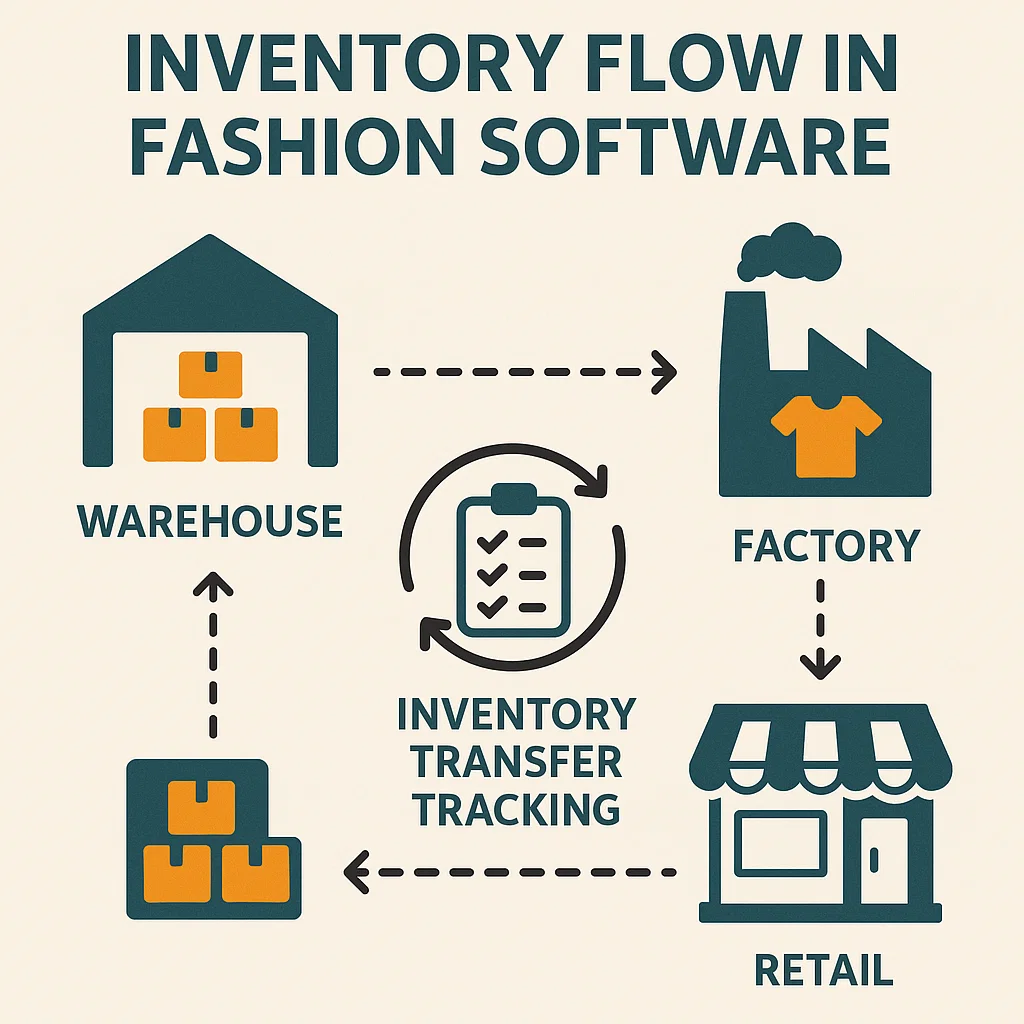
Work in process is the inventory you have paid for and cannot sell yet. Between a cut ticket being issued and finished goods landing in a warehouse, the units are real, they are yours, and in most systems they are invisible. AIMS360 holds all three kinds of production, tracks them to the job step where you need that, and lands them in the right location when they arrive.
Work in process is production that has been issued but not yet received as finished goods. The fabric is cut, the factory has the order, the units exist on paper and in somebody's building, and they are already committed money. What they are not is sellable stock.
AIMS360 holds WIP in three forms, tracks each one against dates and, where you need it, down to the individual job step, and receives the finished units into a specific warehouse where they become stock the rest of the system can sell.
The reason this matters commercially is simple: a brand that can see WIP accurately can sell against it. A brand that cannot either oversells and disappoints a retailer, or undersells and sits on goods. That decision gets made months before the units land.
They exist because domestic cut and sew, offshore fully packaged and finishing work are genuinely different problems.
| Type | What it is for |
|---|---|
| Cut ticket | Built for cut and sew production and tracking a bill of materials, typically for local or domestic manufacturing. This is where fabric and trim consumption gets attached to the goods being made. |
| Production purchase order | Built for import or fully packaged production where no bill of materials is required, generally offshore. It carries an X factory date alongside the issue and completion dates. |
| Garment dye | Built for the garment dye process: dyeing finished goods that were made or bought as prepared for dye blanks. It is also the model for other outside processing where goods leave and come back changed. |
All three have been extended over the years so each can issue a bill of materials and each can carry production tracking, so the choice is about what the work actually is rather than about which one has the features.
By default every production type carries two or three dates: the issue date, the completion date, and on a production purchase order an X factory date as well. Alongside them sit the open balance of units and, with multi-warehouse active, the warehouse the goods are destined for.
That is enough to answer the question most people are actually asking: when was this issued, and when do we expect it in the shipping warehouse so we can start shipping customer orders against it. Every open production item is visible at a glance without anyone configuring a workflow.
Production tracking adds a job level view inside any individual production item, so instead of knowing a cut ticket is open you know which step the goods are on and who has them right now.
The WIP reference, whether that is a cut, a purchase order or a dye. The vendor currently working on the step. The style and color involved. The manufacturing operation or tracking type. Estimated start and complete dates for that specific job.
The workflow is set up for your production rather than shipped as a fixed list, with help from the AIMS360 team. Two brands making the same garment can run entirely different step sequences and both be right.
Columns can be moved and fixed so the production team sees what it needs every time, and any view can be exported to Excel for the people who will always want it in a spreadsheet.
If your production genuinely moves through stages you need confirmed, tracking earns its keep. If a cut goes out and comes back finished, the issue and completion dates are already telling you what you need.
Production tracking does not advance itself. Because brands move goods through production in so many different ways, there is no automated flow. What you set up is an expected workflow with estimated dates for each step, and a person confirms each step as it completes.
That is worth knowing before you plan around it. Production tracking gives you visibility and a plan to measure against. It does not give you a system that knows where the goods are without anyone telling it.
Allocated WIP ties production to the customer orders it is being made for, rather than leaving it as a general pool of units arriving at some point. The cut is created against demand, and the demand knows the cut is coming.
Units already spoken for do not quietly become availability that a salesperson or a channel can commit again. That is the whole argument, and it is the difference between a confident ship date and an apology.
Allocated WIP can be received into a warehouse other than the one it was planned against, which is what happens in practice when a shipment gets diverted or a 3PL takes the container.
Where cutting, sewing and finishing sit with different contractors, the cut ticket records who has what, so a delay has a name attached to it rather than being a general lateness.
Cut tickets carry a bill of materials, so fabric and trim consumption is attached to the production rather than tracked in a spreadsheet beside it. Reporting shows what materials were used by which production.
Receiving covers a vendor purchase order, a cut ticket, or a garment dye, screen print or other outside processing job. That last one matters in apparel specifically: goods leave the building to be dyed, printed or finished, and they have to come back in against the job they went out on rather than against a factory purchase order.
Scan a WIP reference barcode or a UPC on a handheld and receive at the dock, or receive on the desktop. Either way the goods become stock on the same style, color and size record everything else reads.
With multi-warehouse active, production is planned and received into a named location, and with bin locations underneath, into a specific shelf.
A receiving on a closed cut ticket, garment dye or vendor style purchase order can be corrected. Production reality does not always match the paperwork, and pretending otherwise just moves the error somewhere harder to find.
Received units are immediately visible to order management, EDI, ecommerce and accounting, and publish to the 846 inventory advice and every channel from the same figure.
Finished goods rarely stay where they landed. What matters is that the record moves with them.
Move stock from one warehouse to another as a recorded transfer rather than an adjustment at each end, so both locations reflect the same move at the same time.
Where bin locations are in use, transfers work bin to bin as well, which is what makes directed putaway and counting a single shelf possible.
On a handheld, scan a UPC or select the style, color and size and move it, standing at the rack rather than writing it down and keying it in later.
Moving stock to a 3PL is a warehouse transfer with the documents that partner expects, so goods held elsewhere are still your inventory in your system.
Work in process: production that has been issued but not yet received as finished goods. The units are committed money and they are yours, but they are not sellable stock until they land. Being able to see them accurately is what lets a brand sell against production rather than only against shelf.
Cut tickets, production purchase orders and garment dye. Cut tickets were built for cut and sew production and bill of materials tracking, typically domestic. Production purchase orders were built for import or fully packaged production where no bill of materials is needed. Garment dye was built for dyeing finished goods made or bought as prepared for dye blanks.
It follows the work rather than the feature list. Domestic cut and sew with fabric and trim consumption is a cut ticket. Offshore fully packaged goods is a production purchase order. Dyeing or finishing goods you already hold is a garment dye. All three can carry a bill of materials and production tracking, so you are choosing the model, not the capability.
The issue date and the completion date, plus an X factory date on a production purchase order. Alongside them you see the open balance of units and, with multi-warehouse active, the destination warehouse. That is enough to know when something was issued and when to expect it in the shipping warehouse.
A job level view inside an individual production item, so instead of knowing a cut ticket is open you can see which step the goods are on, which vendor currently has them, the style and color, the manufacturing operation and the estimated start and complete dates for that specific job.
No, and this is the honest limit. Moving goods through production tracking is manual and requires someone to confirm each step. Because brands move goods through production in so many different ways, there is no automated flow. What you get is an expected workflow with estimated dates to measure reality against.
No. It is set up for brands that need it, configured to your process with help from the AIMS360 team. If a cut goes out and comes back finished, the issue and completion dates already tell you what you need. Tracking earns its keep when production moves through stages that can slip.
Production tied to the specific customer orders it is being made for, rather than an anonymous pool of units arriving at some point. It stops the same units being promised twice, because goods already spoken for do not quietly reappear as availability somewhere else.
Yes. Production can be received into a warehouse other than the one it was planned against, which is what actually happens when a shipment gets diverted or a third party logistics partner takes the container instead of your own building.
A vendor purchase order, a cut ticket, or a garment dye, screen print or other outside processing job. That last one is specific to apparel: goods leave the building to be dyed, printed or finished and have to come back in against the job they went out on rather than against a factory purchase order. Receiving can be done on the desktop or on a handheld by scanning a WIP reference barcode or a UPC.
Yes. A receiving on a closed cut ticket, garment dye or vendor style purchase order can be corrected. Production reality does not always match the paperwork, and a system that refuses corrections just pushes the error somewhere harder to find.
As recorded transfers rather than an adjustment down in one place and up in another. Stock moves between warehouses, between bins where bin locations are in use, from a handheld standing at the rack, or out to a third party warehouse with the documents that partner expects. Both ends reflect the same move at the same time.
Bring the cut or the purchase order you lost visibility on last season, and the ship window it blew. We will walk through how it would look with WIP dates, job level tracking and allocated production against the orders it was covering.


